Cataract surgery can change the starting point for your vision, but it does not make every viewing distance equally clear. A television across the room and a computer on a desk are two different optical tasks. The practical question is whether one pair should cover both, or whether each task deserves its own wider viewing zone.
Quick answer
Start with the distance your post-surgery vision already handles, then measure the TV and computer from your usual seats. Single-vision distance glasses favor TV and room vision. Single-vision intermediate glasses favor a fixed monitor. A bifocal or progressive may cover more tasks in one pair, but each divides lens space. Two task-specific pairs often give wider zones if switching and budget are acceptable.
How this analysis was made
The decision framework uses four inputs: your post-surgery functional vision, your daily tasks, the real eye-to-task distances, and the dollars available for one pair or two. It also considers how often you switch between the TV, computer, phone, room, walking, and driving.
This is decision support, not a prescription. The National Eye Institute explains that cataract surgery removes the cloudy natural lens and replaces it with an artificial intraocular lens, or IOL. It also notes that some people need a new spectacle prescription after healing. The IOL is inside the eye. The single-vision, bifocal, or progressive lenses discussed below are eyeglass lenses in front of the eye.
Why TV and computer vision may need different glasses
The TV may be 8 feet from your chair while the desktop monitor is 26 inches from your eyes. A single spectacle power cannot automatically optimize both distances. It can favor one, split the lens into zones, or accept some compromise between them.
Time matters too. Watching a movie through a distance-focused lens is different from working across a wide monitor for six hours. The computer task demands a broad, stable intermediate field. TV viewing usually asks for a farther focal range and may involve looking across more of the room.
Switching changes the answer. Someone who watches TV after closing the laptop may tolerate two labeled pairs. Someone who glances between a wall-mounted TV and a computer every few minutes may prefer one multifocal pair, even if neither zone is as wide as a task-specific single-vision lens.
Start with your actual post-surgery visual result
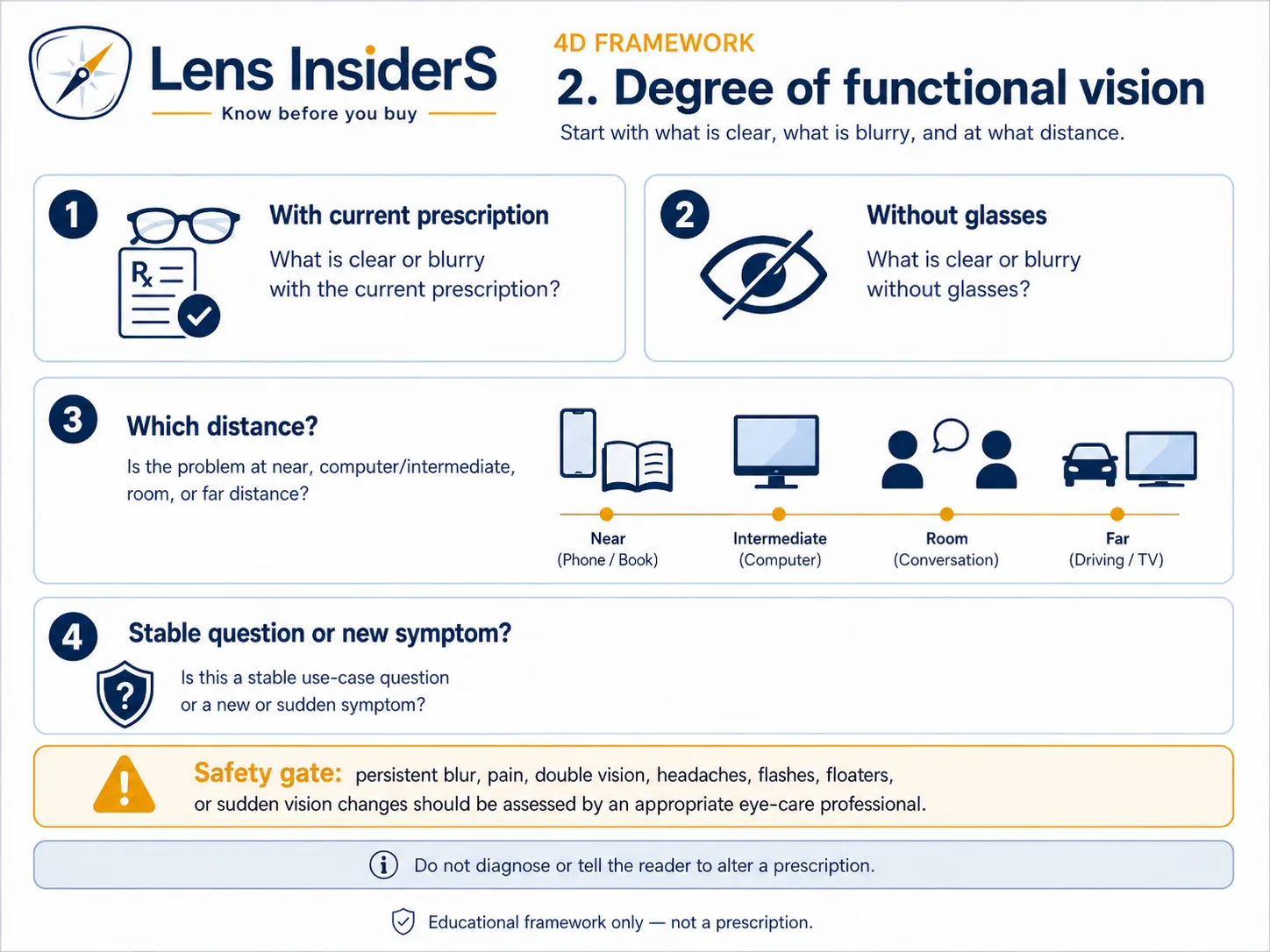
Do not choose eyeglasses from the IOL name alone. Start with what your surgeon or eye doctor has confirmed about the visual result and current spectacle prescription.
Record what is functionally clear with both eyes during ordinary tasks, without turning a home check into a medical judgment:
- TV captions and faces from the normal chair;
- the computer at your normal posture and text size;
- the phone, printed mail, and medication labels;
- people across the room;
- the dashboard and road signs, if driving is part of the intended use.
Then ask what was intended for each implanted IOL. The eyes may have similar targets, or your surgeon may have planned different visual roles for them. FDA information on one approved trifocal IOL shows that some implants are specifically labeled to improve intermediate and near visual acuity while maintaining comparable distance acuity relative to a monofocal IOL. The exact implanted design is a starting condition, not the same thing as choosing a progressive spectacle lens.
Do not infer from blur that the surgery failed, the IOL is wrong, or a particular spectacle power will fix it. The prescription and eye-health assessment belong with the eye doctor. Your task notes help that professional understand where the functional gap occurs.
Measure the screen, TV, and close distances
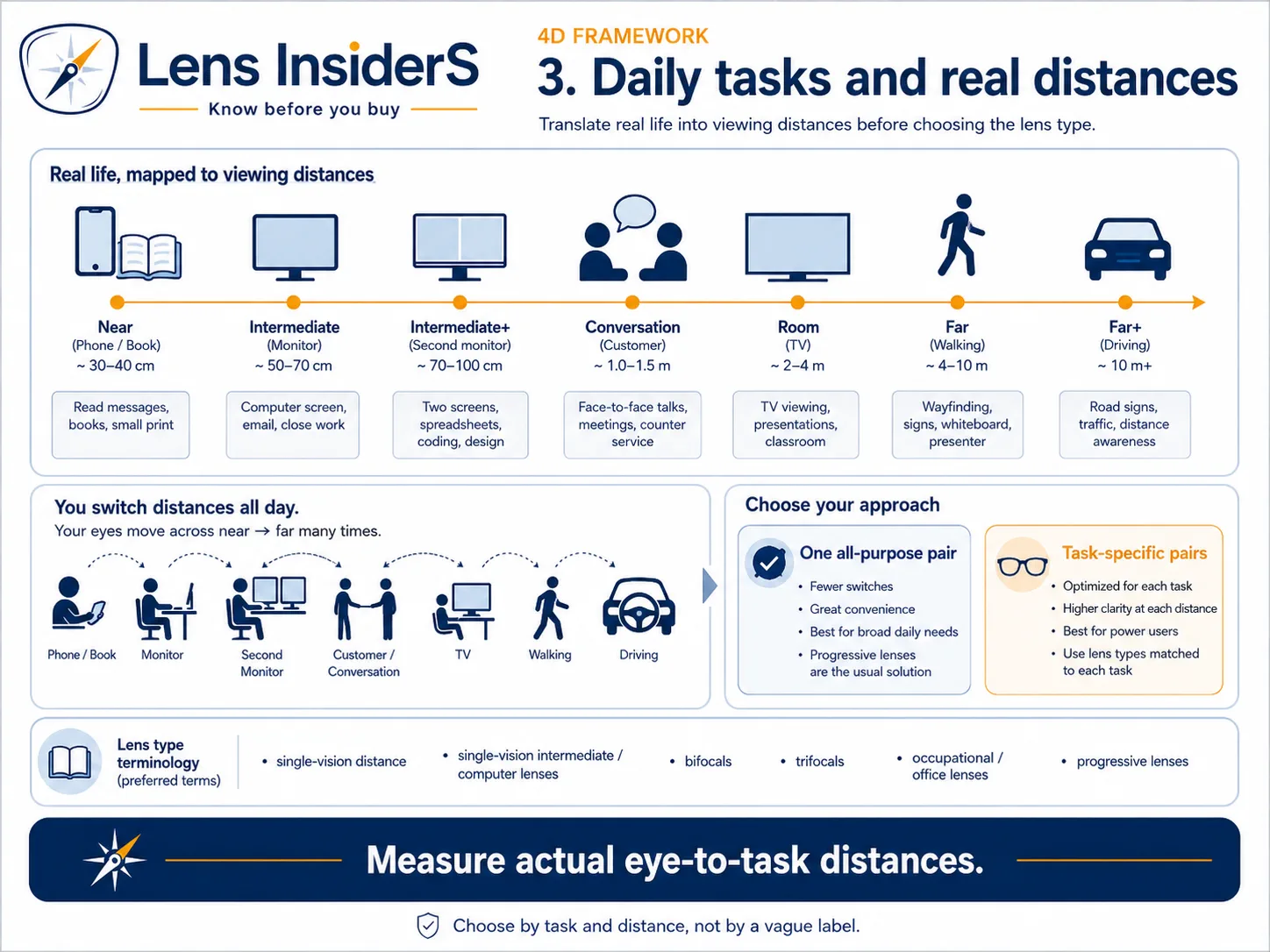
Measure from your eyes, not from the edge of the desk or chair. Sit as you normally do, keep your usual posture, and have another person read the tape if reaching would change your position. Inches or centimeters are both useful.
Distance worksheet
- Primary computer: eye to center of screen: ______
- Second monitor: eye to center of screen: ______
- Laptop: eye to center of screen: ______
- Keyboard or paper: eye to task: ______
- Phone or book: eye to task: ______
- TV: eye to center of screen from the usual seat: ______
- Across-room target: farthest indoor task that must be clear: ______
Task checklist
- Which task occupies the most time?
- Which two distances must be clear without changing glasses?
- How often do you switch between TV, computer, and near work?
- Do you walk around or use stairs while wearing the pair?
- Will this pair ever be used for driving?
- Would changing between two clearly labeled pairs be realistic?
Bring the worksheet, the current glasses, and the intended frame to the appointment. A verbal label such as “computer distance” is less useful than the measured setup.
Single-vision intermediate glasses: favor the computer
A single-vision intermediate pair uses one prescribed correction across the main lens area for the measured computer range. It does not contain a distance zone above or a reading segment below. That simpler layout can preserve a wide field across a large screen.
Best for
- a desktop or laptop that stays at a repeatable distance;
- long sessions where screen width matters more than room vision;
- people who accept changing glasses for TV, walking, or driving;
- a two-pair plan that separates desk use from general distance use.
Not ideal for
It is not a general distance pair. Depending on the prescribed working range, the TV, hallway, floor, or road may be unclear. It may also miss close print if the phone sits much nearer than the computer. Ask the prescriber and dispenser to state the intended clear range and the activities excluded from that pair.
This option is about functional width, not price tier. A well-matched basic task lens can be more useful at one fixed screen than a more complex lens that devotes space to distances you do not need at the desk.
Single-vision distance glasses: favor TV and room vision
A distance pair is the direct starting option when the main gap is TV, faces across the room, outdoor distance, or driving. The entire lens is available for the prescribed distance correction. It does not add a separate computer or reading zone.
Best for
- TV viewing from a stable seat;
- wide room or outdoor distance vision;
- people whose current post-surgery vision already handles the computer without that pair;
- a separate distance pair in a two-pair plan.
Not ideal for
A distance correction may make a close monitor or phone less useful, depending on the post-surgery prescription and IOL result. Do not assume that a distance pair is automatically a driving pair. The prescriber must determine whether vision meets the applicable requirements, and the finished glasses should be verified before use on the road.
Bifocal and progressive tradeoffs for TV plus computer
A conventional bifocal usually places distance vision above and near vision in a lower segment. That structure can work for TV and close print, but it may leave the computer between the two prescribed ranges. The distance zone can be too far-focused for the monitor while the near segment can be too close-focused.
A task-specific bifocal can be discussed when two defined working ranges matter, such as computer and close paperwork. It should be clearly identified because a pair made for intermediate and near use is not a distance or driving pair.
A general-purpose progressive changes power gradually from distance through intermediate to near. It can let one pair move from TV to computer to phone. The compromise is space. The computer area occupies a corridor rather than the full lens width, so a large screen may require more head movement than a single-vision intermediate pair.
Best for
- frequent switching among TV, room, computer, and near tasks;
- one-pair convenience when changing glasses would be disruptive;
- wearers who can obtain accurate frame adjustment, fitting measurements, and follow-up;
- moderate screen use where an intermediate corridor is wide enough for the real setup.
Not ideal for
A standard bifocal is not the obvious answer when sustained computer work is the priority. A general progressive is not automatically the best screen lens when the monitor is wide, high, off-center, or used for most of the day. Read the dedicated guides to single-vision, bifocal, trifocal, and progressive lenses and progressives for computer work for the design details this post does not repeat.
One pair or two pairs after cataract surgery?
| Scenario | Tasks and distances to record | Switching tolerance | Budget question | Starting discussion |
|---|---|---|---|---|
| TV is the main problem; computer is already functional | TV, room, dashboard, and road if relevant | Low need to switch at the desk | Can one distance pair solve the only important gap? | Single-vision distance |
| Computer is the main problem; TV is already functional | Every monitor, paper, phone, and farthest desk task | Accepts removing the pair away from the desk | Can a task pair avoid paying for unused distance zones? | Single-vision intermediate |
| TV, computer, and phone must work in one pair | All three ranges plus walking and driving needs | Does not want to change pairs | Does the quote include accurate fitting and remake support? | General-purpose progressive |
| Long computer sessions plus demanding distance use | Full workstation and TV or driving distance | Comfortable keeping two labeled pairs | Can the budget cover two appropriate lenses, frames, and future replacement? | Intermediate pair plus distance or general-purpose pair |
| Computer and close paperwork dominate | Monitor, keyboard, paper, phone, and farthest indoor target | Changes to a distance pair before leaving the workspace | Compare task bifocal or office-lens service protection, not just lens price | Task-specific bifocal or occupational design |
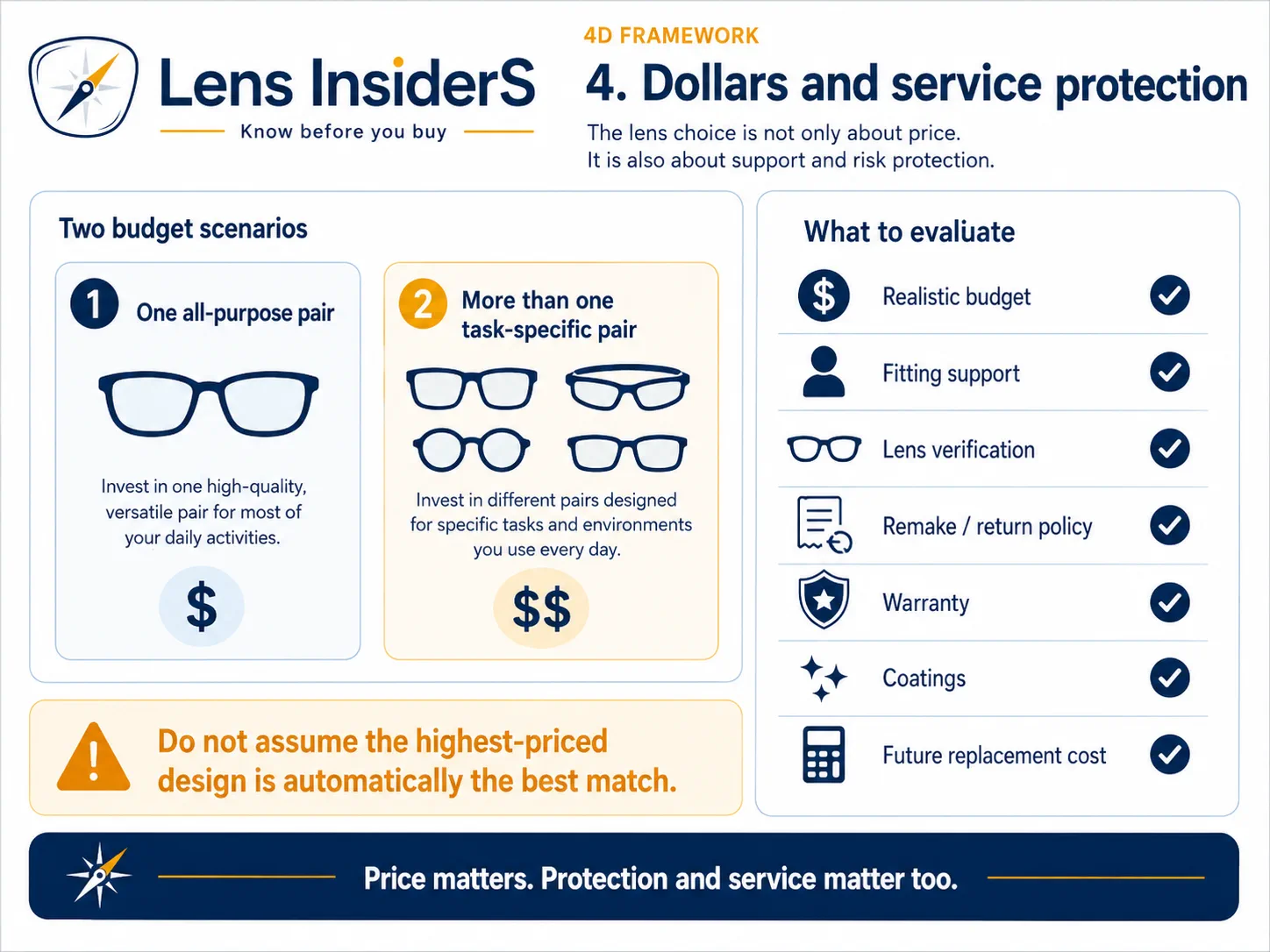
One pair reduces switching and duplicate frame costs. It also asks one lens to serve more distances. Two pairs add cost and require a routine, but each pair can devote more usable area to its main task.
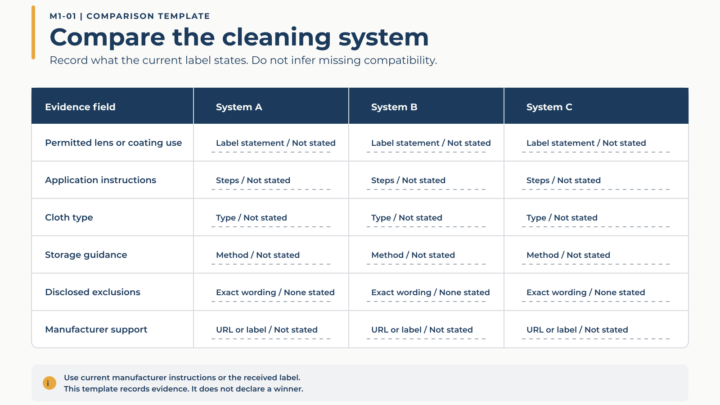
Compare complete quotes. Include the frame, lens material, coating, fitting, finished-lens verification, adjustment, warranty, remake or return terms, and expected replacement of two pairs rather than one. The highest-priced design is not automatically the best match.
If you need near and intermediate vision but not full distance at the desk, an occupational design is another option. See office lenses vs general-purpose progressives before treating it as an all-day pair.
Limitations of this decision guide
This guide cannot determine your spectacle prescription, whether healing is complete, why a particular distance is blurred, or whether the two eyes are working together as intended. It cannot evaluate the implanted IOL, the cornea, retina, eye pressure, or any post-surgical complication.
It also cannot predict the width of a finished progressive corridor from a marketing tier. Prescription, frame dimensions, fitting position, design, and task distance all affect the usable result. Use the article to prepare better measurements and questions, not to self-prescribe or judge a surgical outcome.
Safety after cataract surgery
Do not use new glasses to explain away a sudden or concerning change. The National Eye Institute advises contacting the eye doctor right away after cataract surgery for vision loss, severe pain that does not go away, very red eyes, flashes of light, or many new floaters. Follow your surgeon’s instructions and appointment schedule, and report any other new vision problem promptly.
What to confirm with the surgeon, optometrist, and optician
With the cataract surgeon or ophthalmologist
- What IOL model or visual target was used in each eye?
- Were the two eyes intended for similar distances or different roles?
- Has the surgeon cleared you to order the intended glasses now?
- Are there eye-health findings or post-surgery instructions that affect spectacle use?
- Which changes should trigger a call to the surgical office?
With the prescribing optometrist or ophthalmologist
- What is the current spectacle prescription for each eye?
- Which measured range should the computer prescription target?
- Would the planned distance correction change how the computer or phone appears?
- Can one prescription serve the required tasks, or are two task prescriptions more realistic?
- Is the intended pair appropriate for walking, stairs, and driving?
With the optician
- Which exact lens layout is being ordered: distance, intermediate, bifocal, occupational, or general progressive?
- What frame and fitting measurements does that design require?
- Will the frame remain stable at the measured position?
- How will the finished lenses be verified against the prescription and intended use?
- What do the adjustment, warranty, return, and remake terms cover?
Write the TV, monitor, phone, and farthest room distances on one page today. Mark the two tasks that must work without changing glasses, then take that page to the prescriber and optician before choosing the lens.
Sources
- National Eye Institute: Cataract Surgery
- National Eye Institute: Eyeglasses for Refractive Errors
- U.S. Food and Drug Administration: Patient-Reported Outcomes in Intraocular Lens Labeling

About Ho Truong
Ho Truong is a trained optician at a family optical practice established in 1991. Lens InsiderS explains lens design and fitting choices for buyers. It does not diagnose eye conditions or replace an eye examination.